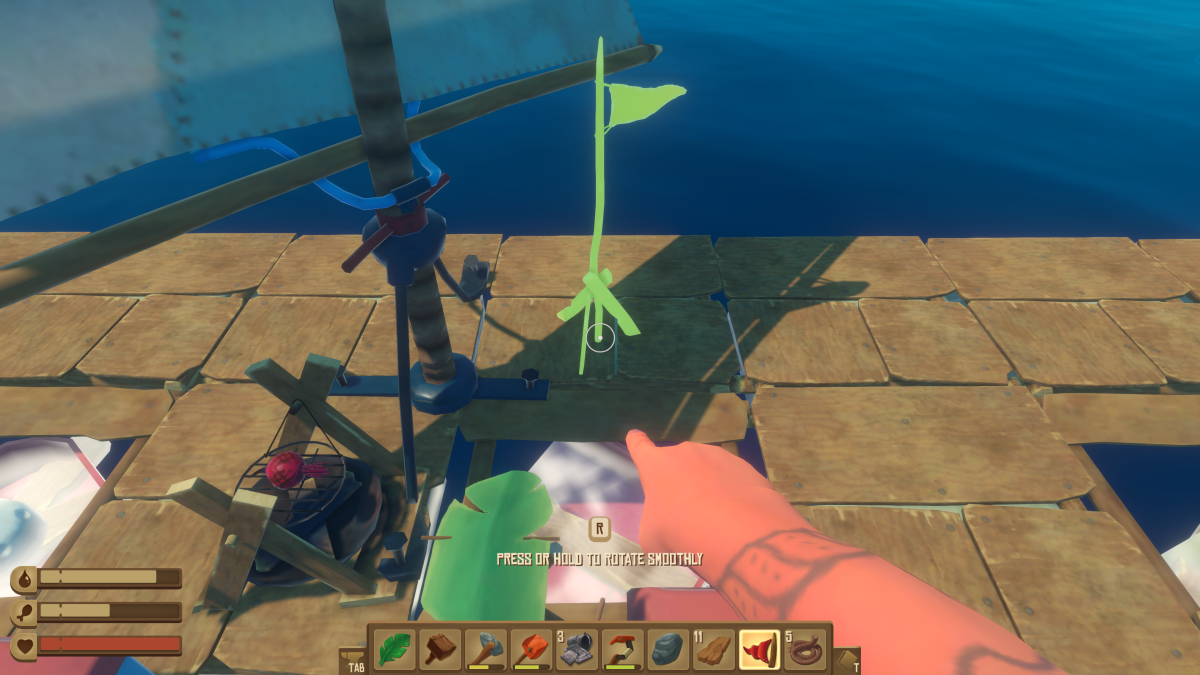
Steer around small islands (for now)
In the very early game you want to avoid the small islands you drift toward, not aim for them. You’ve no real way to steer or reorient the raft yet, and if you run aground and the raft gets shoved sideways, you lose the wide-raft collecting lane. Instead of facing forward with room to run left and right along the front edge grabbing flotsam, you end up drifting sideways with nowhere to run. So early on, slide past the little islands rather than aiming for them.
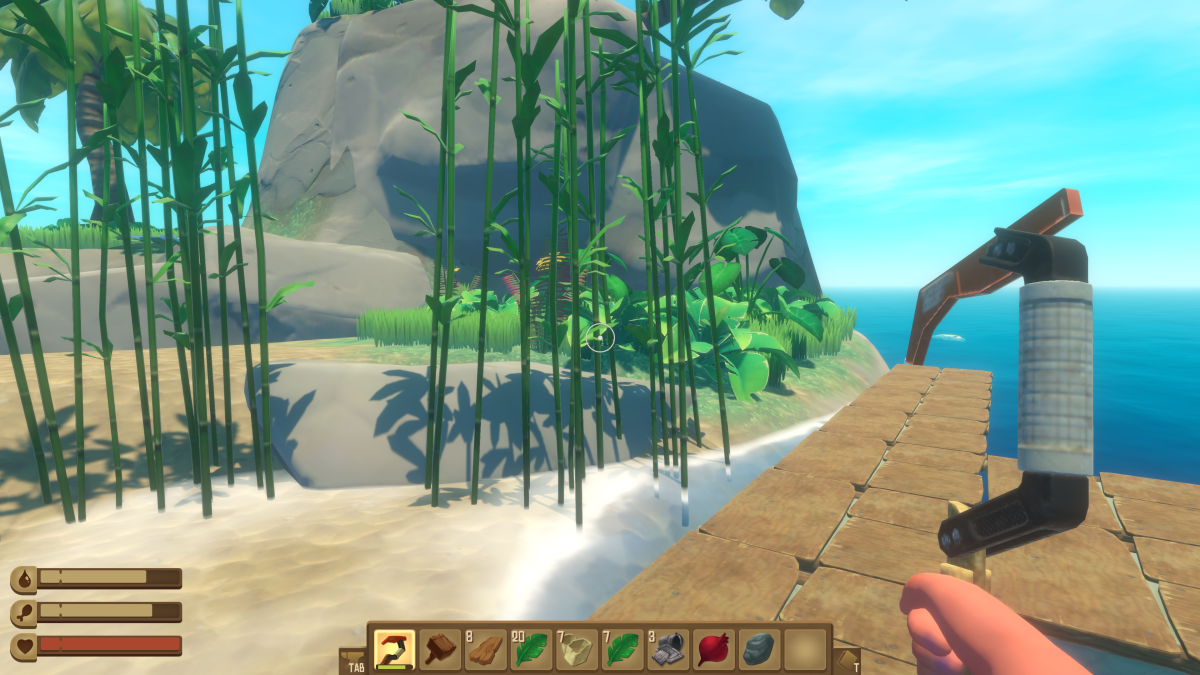
A sideways raft is far easier to prevent than to fix. This early you’ve no steering wheel and no quick way to spin the raft back into line. The only thing that reorients it at all is bumping one side against an obstacle, usually an island, and lining that up with a paddle or sail is slow, finicky work. So the aim is avoidance: as an island drifts toward you, use a paddle or sail to steer around it rather than into it.
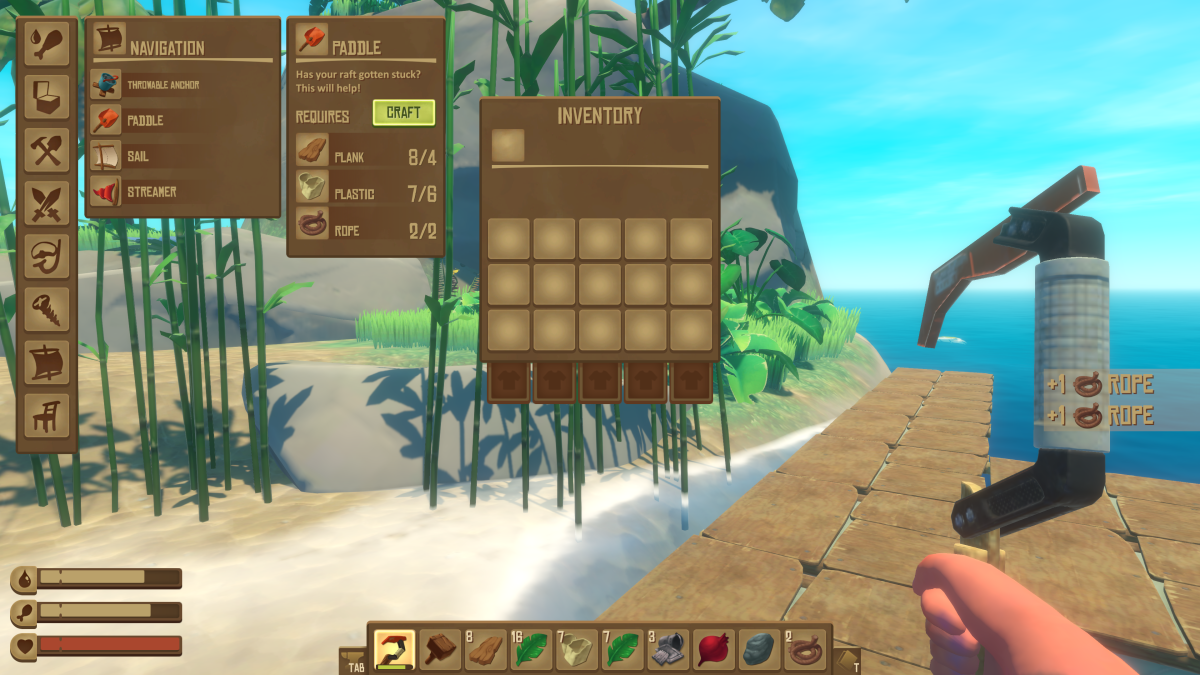
If you do get stuck on one, open the crafting menu, go to the Navigation tab, and build a Paddle (four planks, six plastic, and two rope). Its in-game description is “Has your raft gotten stuck? This will help!” Equip it and you can paddle the raft back off the island and get moving again.
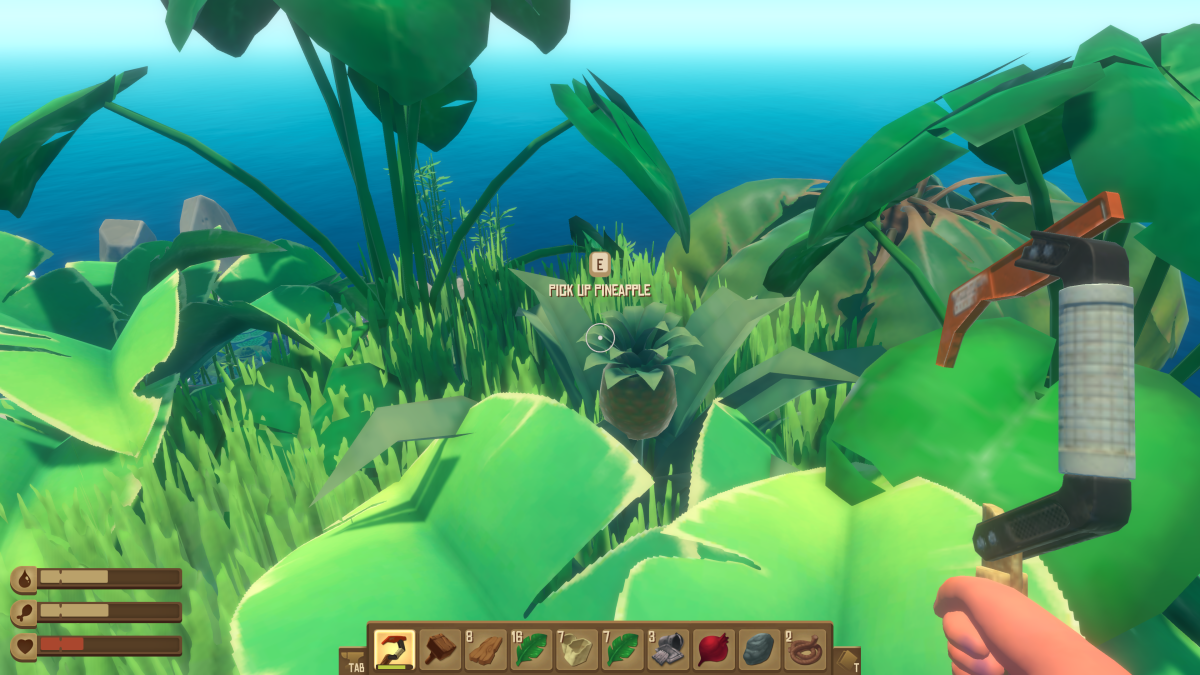
And if the raft is truly wedged in place and going nowhere for the moment, hop onto the island and grab any watermelons and pineapples you can find. They’re a quick, easy source of both food and water while you craft your way off.
Only leave the raft if it’s truly stuck and sitting completely still. If it’s still drifting even a little, stay on it. At this stage you’ve not even built the most basic, single-use anchor yet, so there’s nothing holding the raft in place while you’re off it. A raft that slips away while you’re ashore is gone for good, there’s no way to swim after it and climb back aboard once it’s out of reach, and your only recovery is to reload your last save.
None of this means islands are useless. Very soon you’ll want to stop at the small ones on purpose, because they’re where you harvest the raw materials the open water doesn’t hand you: metal ore and copper ore, sand, clay, seaweed, and more scrap. That’s something to come back to once you’re set up (we get to it further down), but in the opening stretch, flotsam is still your main source of materials.
Your first steering: the Sail (and a Streamer to read the wind)
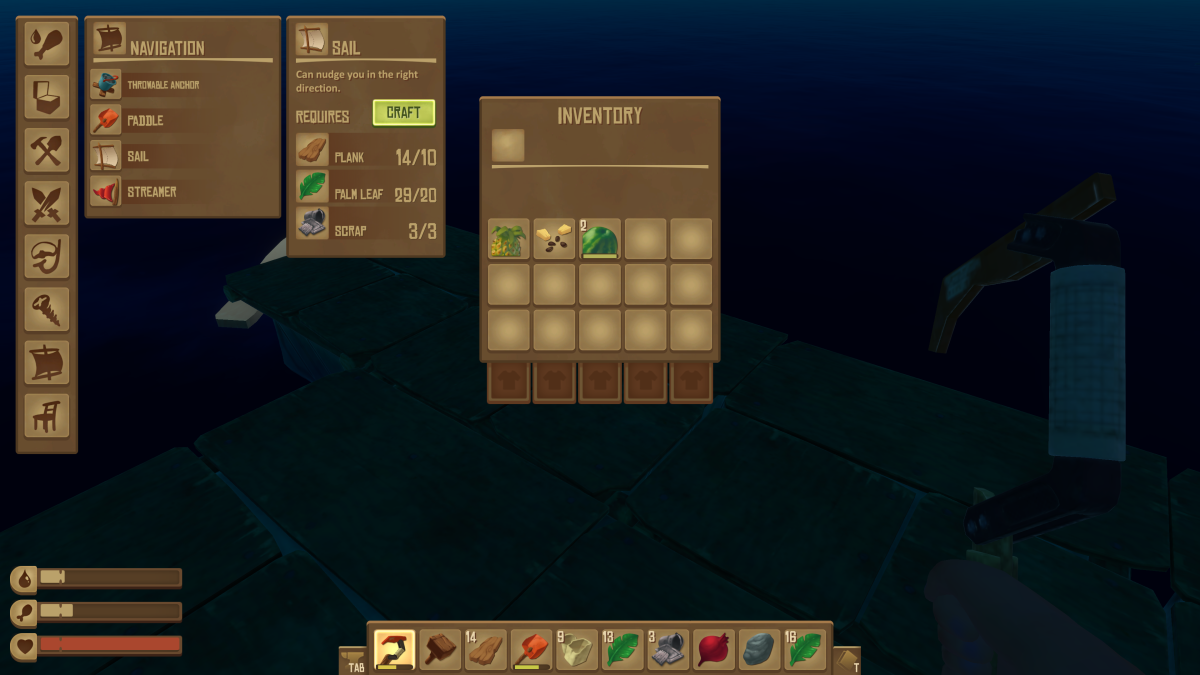
For most of the early game the current decides where you go. The Sail is your first real say in where you end up, which makes it an early priority to save up for. It’s another Navigation-tab craft, costing ten planks, twenty palm leaves, and three scrap. In the game’s words, it “can nudge you in the right direction.” That twenty-leaf price tag is steep when you’re also feeding leaves into rope, which is part of why it takes a while to afford, but once it’s up you can start catching the wind to push the raft where you want instead of drifting wherever the ocean sends you.
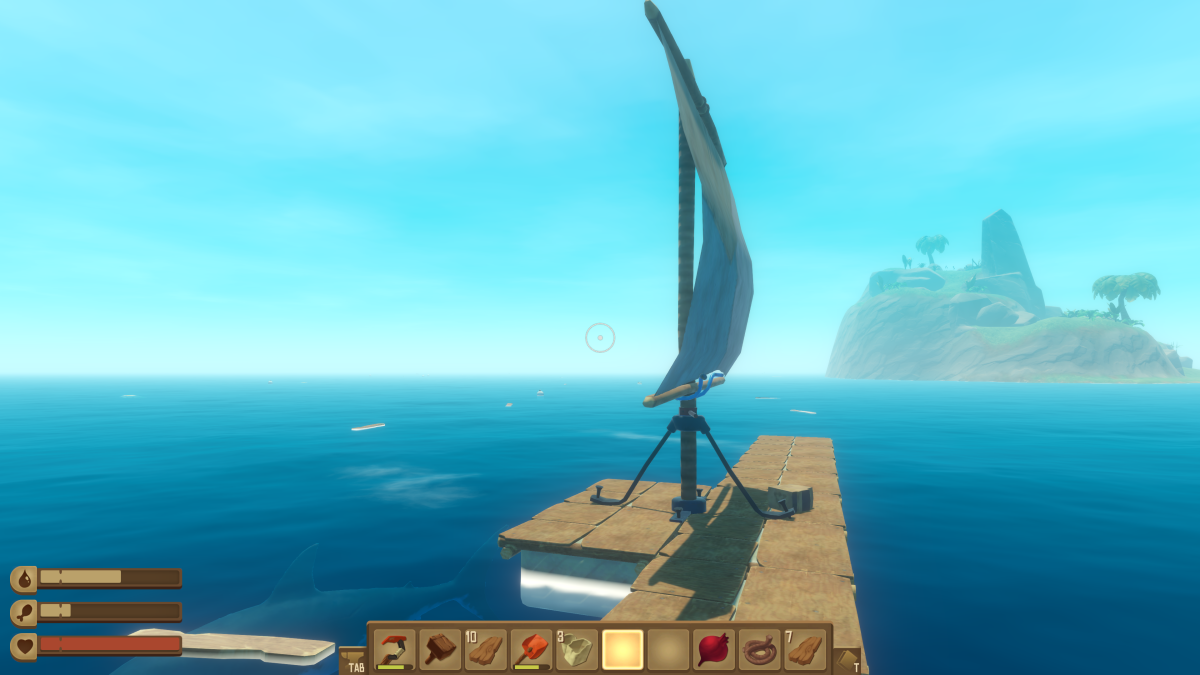
Steering isn’t the same as rotating. The Sail changes where you go, always subject to the wind, but it can’t spin the raft around to face a new direction. As covered above, reorienting the raft still comes down to nudging one side into an obstacle, usually an island (the small drifting rafts that turn up now and then work as pivots too, but they’re rare).
The natural companion is a Streamer. It does nothing for movement on its own, but it shows you the wind direction. Once you’re sailing, that’s what lets you steer with purpose instead of guessing. Build the Sail first, then add a Streamer to read the wind.
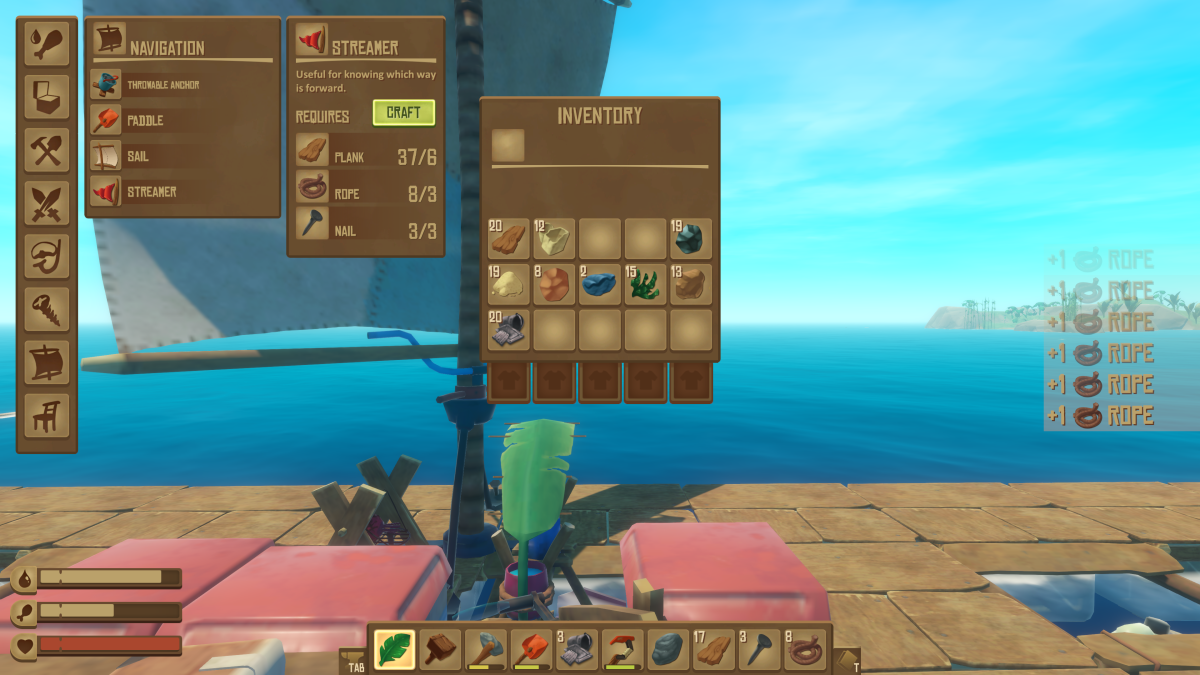
Place the Streamer right next to the Sail so you can read the wind and adjust your heading at a glance, and then aim to sail with the wind rather than across or into it. Going with the wind is faster, and it carries you through more open water, which means more flotsam ending up in your nets.