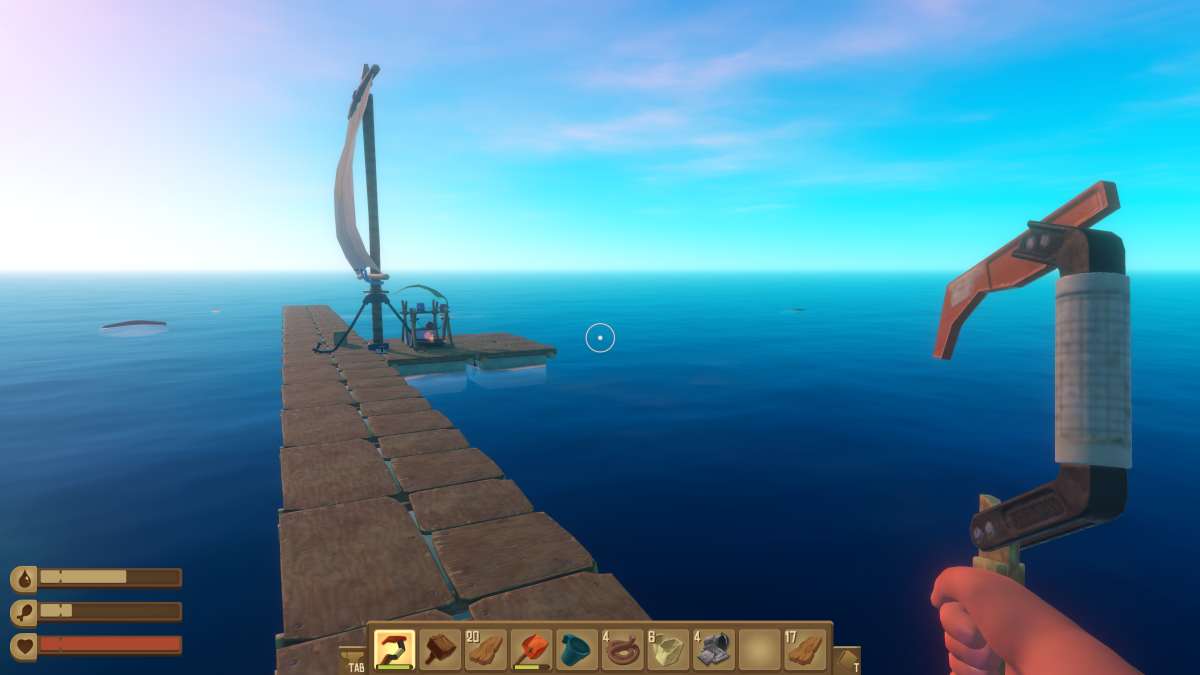
The Research Table
The build you should not skip in this stretch is the Research Table (fourteen planks and two scrap, under the Other tab), which unlocks most of the crafting tree. In the game it’s “used to research new items to craft.” The way it works: drop one of each raw material you’ve collected into its research slot, and whenever the Research button lights up, click it. That spends a single unit of the item and permanently unlocks its use in recipes, which then makes new recipes available to learn. For craftable recipes, a recipe won’t appear until every one of its ingredients has been researched (blueprint recipes are unlocked separately), so research each new material as you first pick it up, and keep a spare aside for that rather than spending your last one on a build.
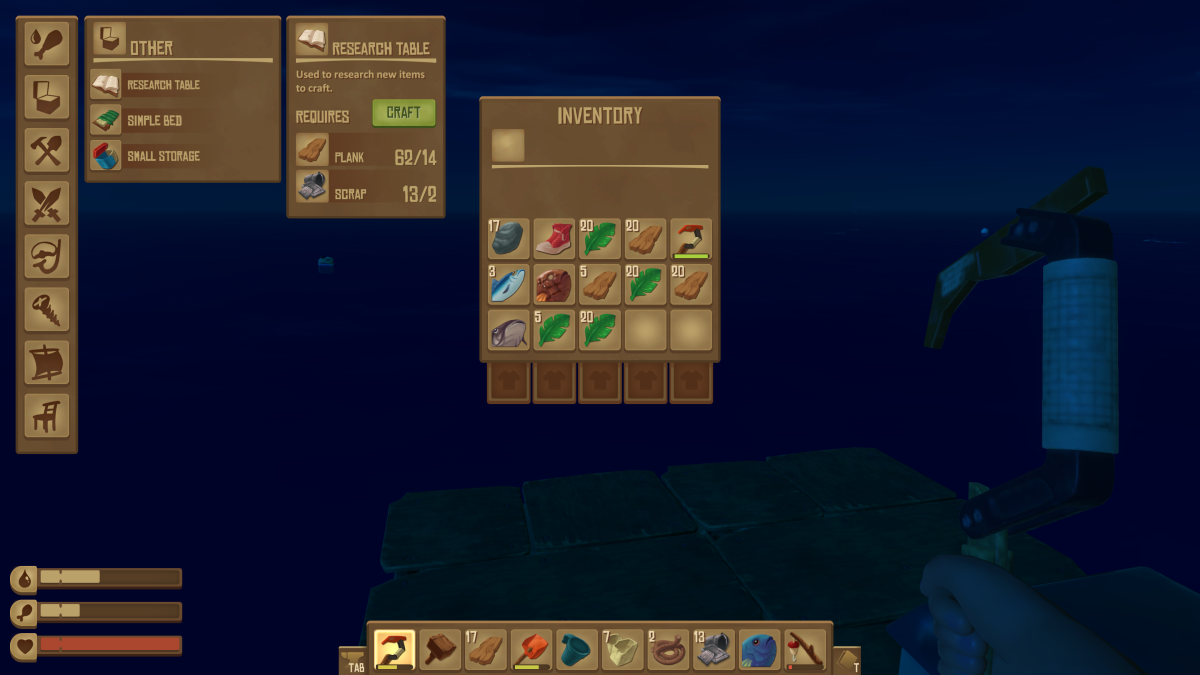
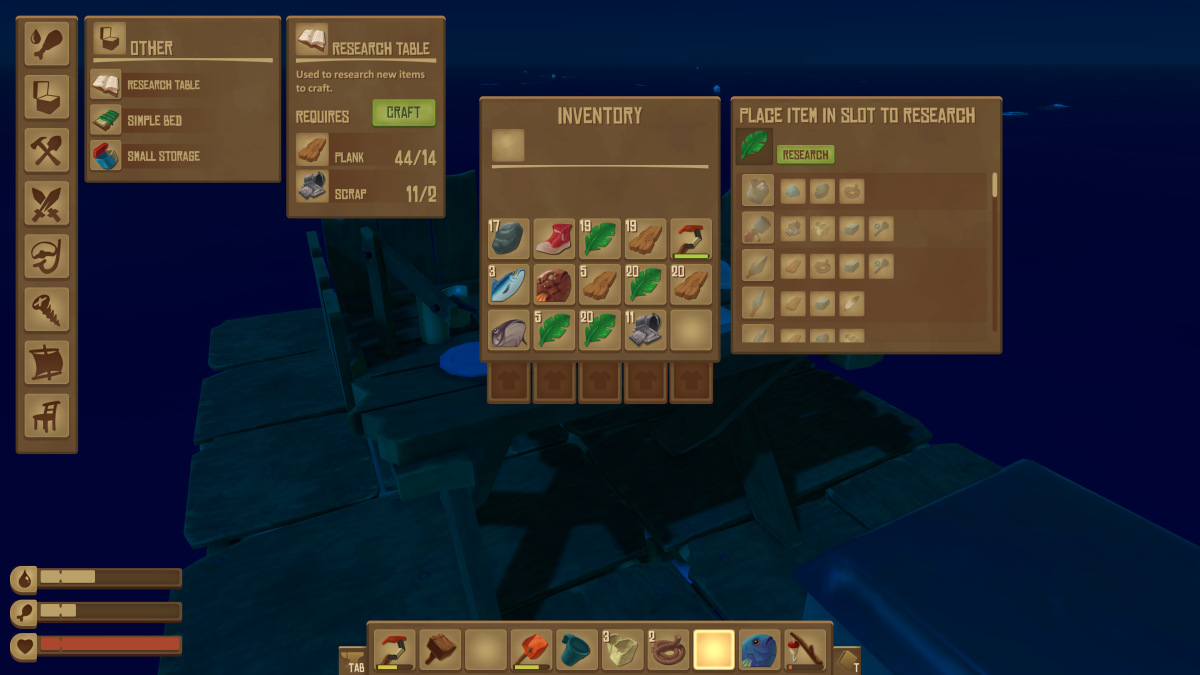
The first thing to chase through that grid is the Simple Collection Net, the automatic flotsam catcher we flagged early as your first real goal. You unlock it here: research the raw materials the net needs, learn the recipe, and you finally get the ocean collecting flotsam for you. Build it as soon as you can.
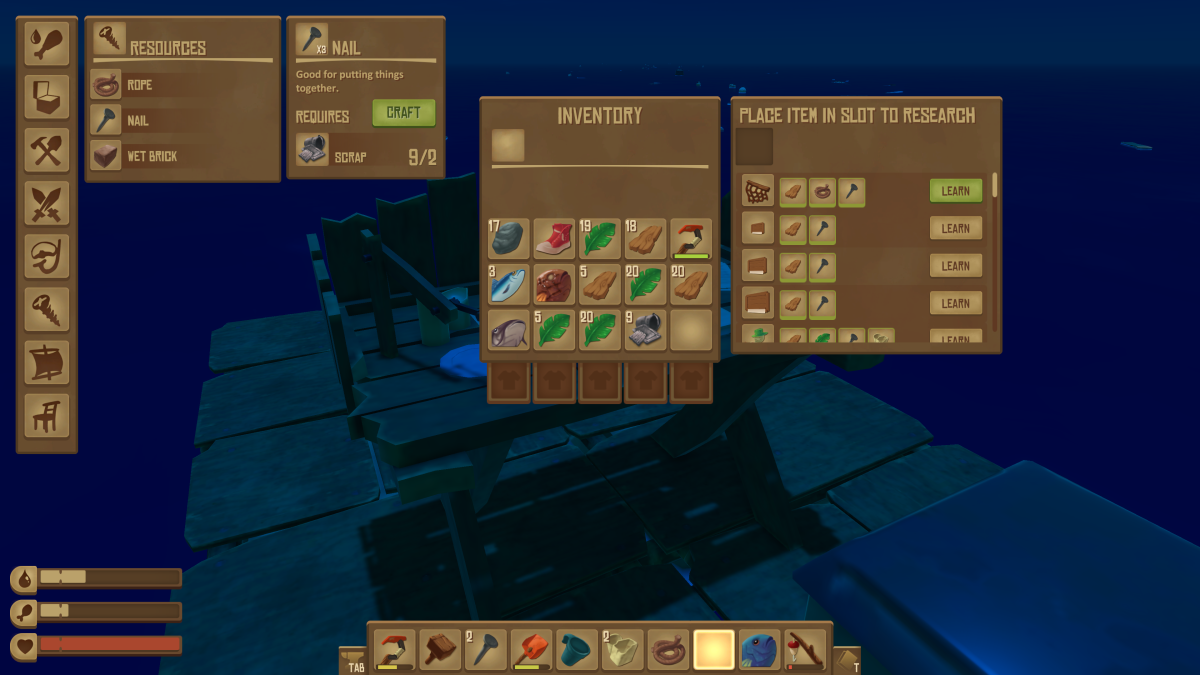
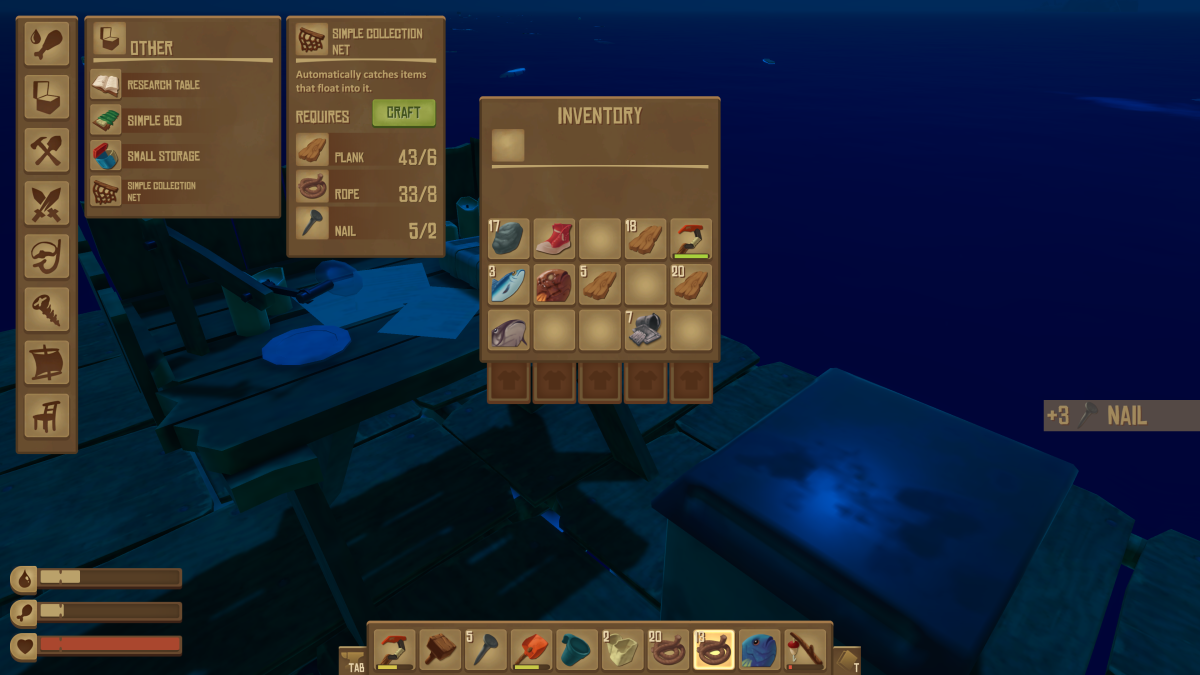
Once you’ve learned the recipe, build as many nets as you can. They can sit on any tile, but a net only catches what floats into it, so line them along the front and sides where the current brings the flotsam. There’s also a material-saving trick here: you don’t need a solid wall of them. Space the nets every other square, with a gap between each, and they’ll still catch most of what drifts in, because an item slipping through a gap usually brushes a net on one side or the other. That alternating layout gives close to full coverage for half the nets, which adds up fast when each one costs eight rope.
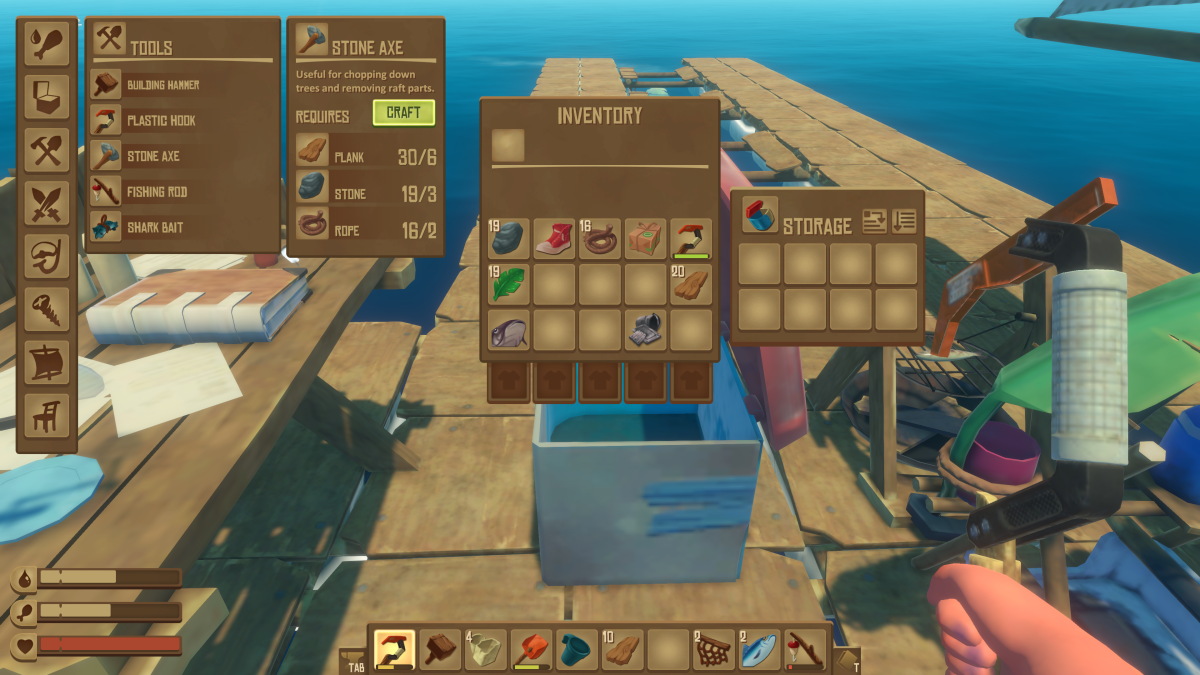
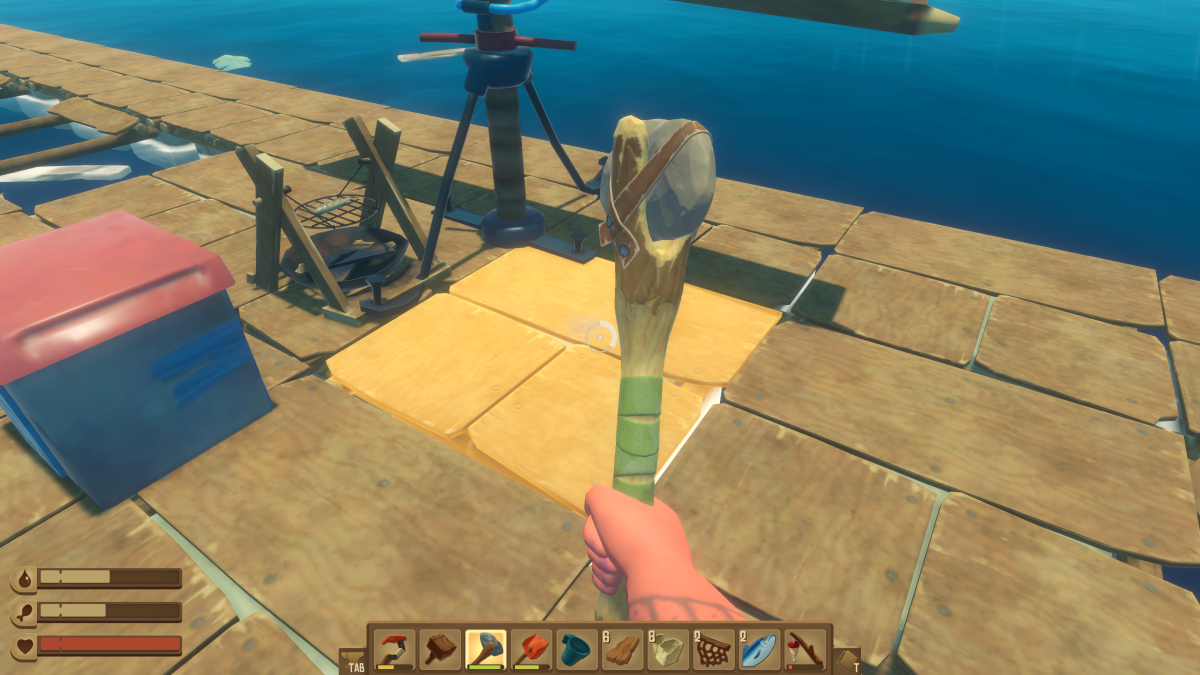
You may need to make room first. If your edge is already solid foundation, clear a few tiles to slot the nets into, and that’s a job for the Stone Axe (six planks, three stone, two rope, Tools tab). It’s listed for “chopping down trees and removing raft parts,” and it’s that second half you want here: the axe removes foundations you’ve already placed, so you can pull up a tile and drop a net in its place (and reshape the raft however you like as it grows). The tree-chopping half is useful later, once you start visiting islands for wood.
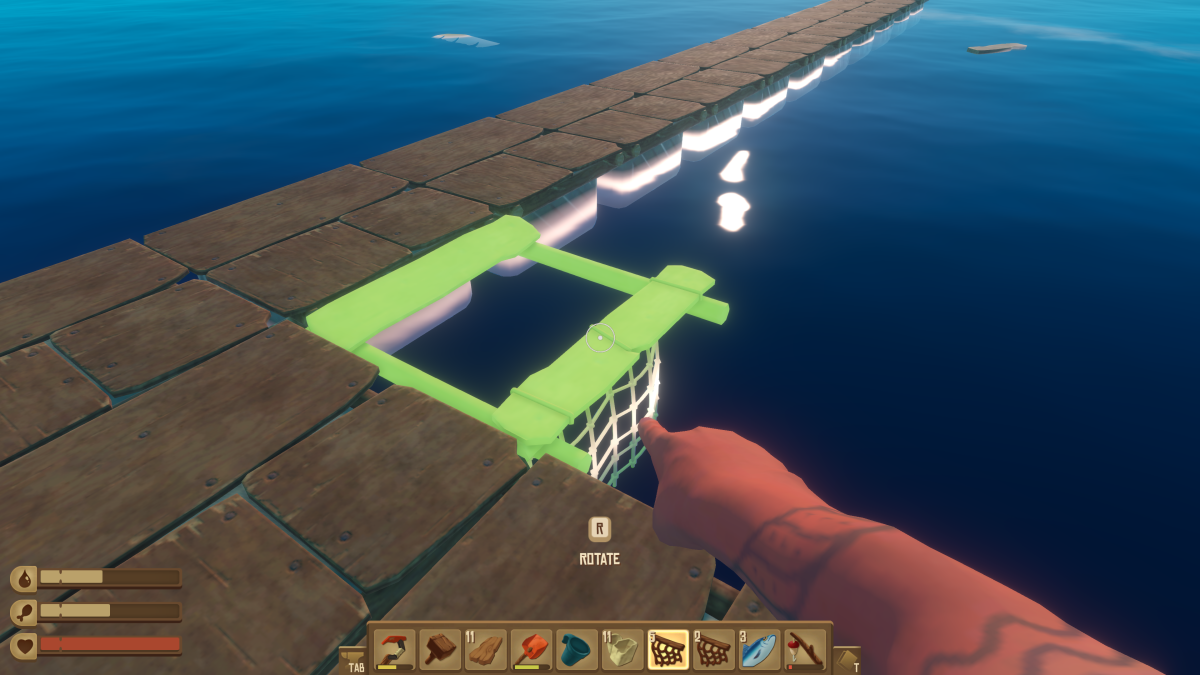
The last thing to deal with is the shark. It will chew nets off the raw edge, and a net costs a lot more than a foundation tile. The fix is to flank them: run a row of plain foundations along the outside of your nets so the nets are no longer the outermost pieces. The shark then bites the cheap, quickly-rebuilt foundations instead of your rope-and-nail nets. Combine that with the every-other-square spacing, and the nets stay cheap and out of the shark’s reach.
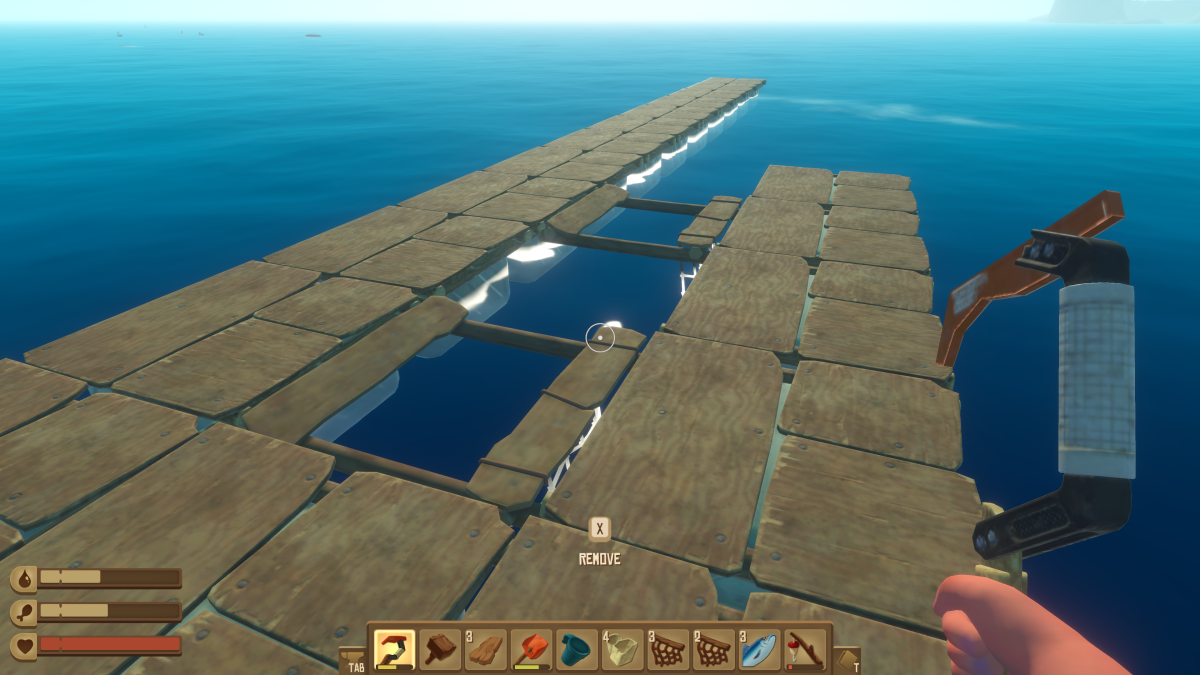
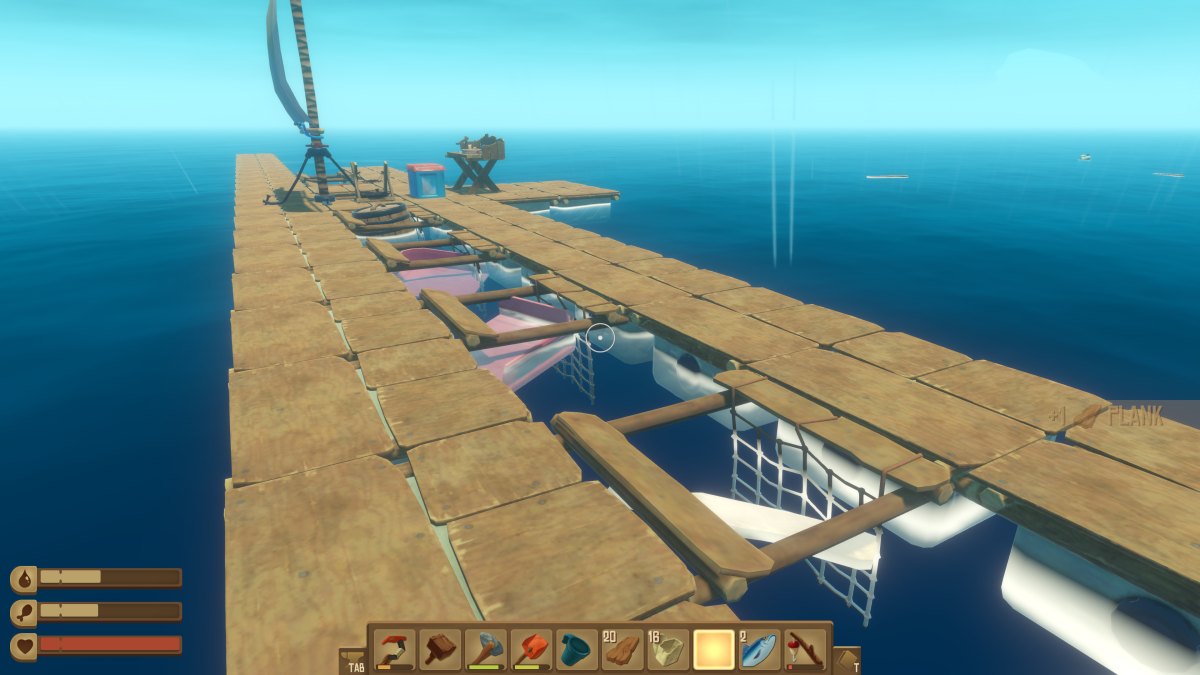
This is the reason for all that rope-hoarding. The net “automatically catches items that float into it,” so line a few along your wide front edge: each net holds up to ten items, and a row of them keeps gathering in the background while you build and explore.